
While performingSelection of Contract Manufacturers for Potato FlourMany large food companies have long faced a hidden yet costly risk: a severe disconnect between suppliers“ actual control capabilities and the strength they claim to possess. What appears to be ”direct factory supply“ often involves a multi-tiered distribution process—”brand owner → distributor → contract manufacturer → multiple changes of hands for raw materials”—by the time the goods are actually shipped. Each transfer in the chain results in a loss of accuracy in information and a decline in quality.
I. The “Lottery Box” Quality Crisis Caused by Multiple Layers of Resale Involving Contract Manufacturers and Traders
It is an open secret in the industry that intermediaries operating under the guise of “factories” but lacking substantial processing capabilities are estimated to account for as much as 35–50% of the domestic full-powder market. They wage price wars by leveraging their extremely low management costs, thereby concealingDrawbacks of Food Ingredient Traders. However, even the slightest disruption in the supply chain can cause these underlying cracks to completely tear apart the customer’s production lines.
- The source of raw materials changes at any time based on the market floor price; there is no fixed place of origin.
- Production is subcontracted to multiple third-party manufacturers, resulting in significant discrepancies in quality control standards.
- Batch test reports often involve “swapping samples,” meaning the actual tests are not conducted on samples from the same batch.
- During peak season when production capacity is tight, the company is unable to fulfill orders and may even prioritize canceling them.
- The traceability chain is extremely fragile, making it difficult to assign blame when food safety incidents occur.
- Through our own farming operations or long-term contract farming bases, we ensure the genetic stability of our starch varieties.
- Washing → Steaming → Drying → Grinding; the 100% production line is not outsourced.
- Each batch is inspected individually, and the Certificate of Analysis (CoA) and traceability code are uniquely linked.
- Dedicated production scheduling slots for major clients, with absolute assurance of delivery priority.
- A fully transparent MES system that allows one-click tracking from the field to the factory.
II. From Storing Raw Potatoes to Grinding and Testing: Why Independent Manufacturing Across the Entire Supply Chain Is Irreplaceable
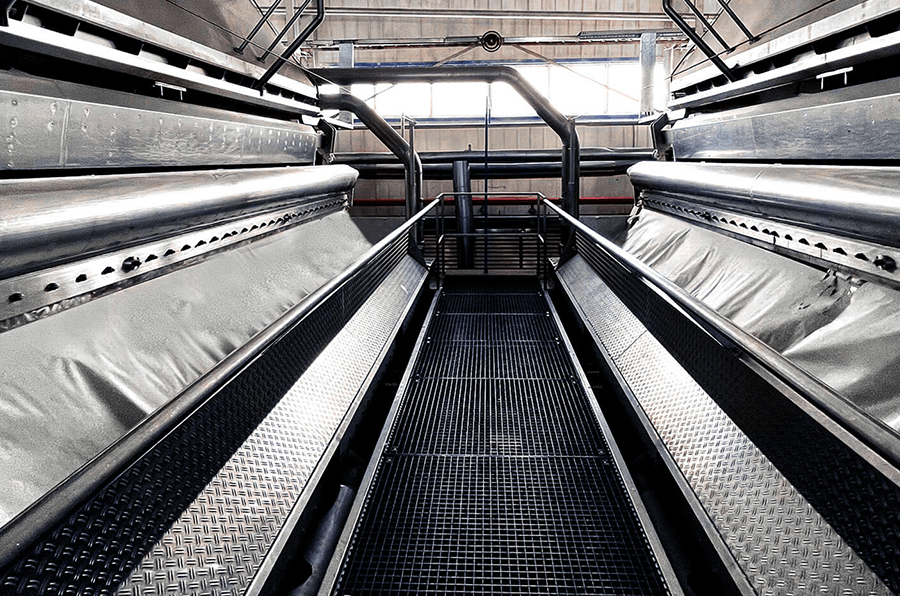
Many procurement professionals mistakenly believe that outsourcing merely breaks down processes, overlooking the fact that it actually breaks the most critical “quality control loop.” Only by adhering toEnd-to-End Independent Manufacturing...only then can the physical fluctuations in the production process be converted into controllable data.
(Dry Matter Interception Line)
(Precise Control of Gelatinization Degree)
(Moisture content ≤ 81 TP3T locked)
(Full Physical and Chemical Inspection of the Batch)
以Steaming and AgingTake this process as an example: Even potatoes from the same growing region naturally exhibit fluctuations in dry matter content. Our in-house production ofLarge-Scale Potato Processing FacilitySteam pressure and cooking time can be monitored in real time to dynamically compensate for variations in dry matter content; however, under contract manufacturing arrangements, brand owners are completely in the dark about this process, which directly leads to catastrophic issues such as sticking to the pan and belt breakage at downstream puffing plants.
III. The PLC: The Central Intelligent Control Brain—Eliminating Human Error in the 99% System
In extensive processing, manual judgment based on experience (temperature adjustment, feed discharge, and color assessment) is the biggest culprit behind quality fluctuations. Junsheng Agriculture has integrated its entire whole-grain flour production line into PLC (Programmable Logic Controller) Central Intelligent Control System...reducing the previously ambiguous room for maneuver to near zero, thereby ensuring that long-term, large-volume ordersConsistency of Raw Material Quality Across Batches。
| Process Control Points | Traditional Manual Experience-Based Approach | Junsheng PLC Smart Control Mode |
|---|---|---|
| Temperature Control in the Steaming Section | Workers manually adjust the valve while checking the clock (with a very large margin of error) | PID Adaptive Variable-Frequency Control (Error: ±0.1°C) |
| Moisture Content of the Finished Product | Samples are tested every 2 hours (significant delay) | Online Microwave Moisture Analyzer with Real-Time Correction (Error: ±0.31 TP3T) |
| Formula Switching and Handoffs | Information gaps during shift changes make parameters highly susceptible to tampering | Retrieve SKU profiles with a single click, eliminating the need for manual intervention |
| Data Traceability and Compliance | Retroactive Entry of Paper Forms (Lack of Supporting Documentation) | Logs are automatically stored in a cloud database at a rate of one per second, ensuring tamper-proof integrity. |
For FSSC 22000 audits or audits by multinational food giants, tamper-proof production charts automatically generated by PLC systems serve as the strongest defense against any paper-based “records.” As a result, the time required to prepare annual audit documentation has been reduced by 70%.
IV. Why Is “Maintaining a Large Warehouse Buffer” the Litmus Test for a Top-Tier Supply Chain?
The production of potato flour is subject to extremely strict seasonal constraints (the harvest of raw potatoes is concentrated in the fall, from August to November), but consumption at downstream processing plants remains steady throughout the year. This requires source manufacturers to maintain a substantial safety stock of finished products.
In contrast, when faced with supply shortages caused by imbalances between supply and demand, traders—who “have no warehouses and operate on a light-asset model”—have no choice but to immediately terminate their low-price long-term contracts and resell the goods to retail customers at a higher price. Therefore,On-site inspection of the finished goods warehouse floor space...is always the sharpest weapon for weeding out substandard suppliers.