
Grain allergies are one of the major causes of food sensitivities in cats and dogs today. Gluten proteins in wheat and zymogen in corn can trigger chronic intestinal inflammation in some pets with sensitive constitutions, manifesting as recurrent vomiting, loose stools, and itchy skin. Against this backdrop, sourcing the highest-quality **premium grain-free pet food ingredients** has become a core strategy for major contract manufacturers and leading brands.
I. The Perfect Hypoallergenic Carbohydrate Base: The Top Choice for Carbohydrate Sources in Grain-Free Dog Food

Potato flour stands out in this category primarily due to its extremely low allergy risk and excellent nutritional density. As a purely natural ingredient, potatoes are naturally gluten-free, and their dietary fiber consists mainly of pectin and resistant starch. These substances effectively promote the colonization of beneficial gut bacteria in pets, improve the composition of their gut microbiota, and demonstrate significant tolerance benefits for pets with irritable bowel syndrome or digestive sensitivities.
-
1
Prevents Allergies, Naturally Gluten-Free
It completely eliminates allergenic gluten proteins, making it the perfect alternative for cats and dogs with intestinal sensitivities or diagnosed grain allergies.
-
2
The Prebiotic Effects of Resistant Starch
RS2/RS3-type resistant starch is not broken down as it passes through the digestive tract; once it reaches the large intestine, it is fermented as a natural prebiotic, producing short-chain fatty acids that nourish colon cells.
-
3
A more moderate glycemic response (GI value)
Compared to refined broken rice or tapioca flour, whole-grain flour has a more stable glycemic index, which helps ensure a steady release of energy in weight management formulas for indoor, spayed or neutered pets.
II. Potato Flour Formulation for Extruded Cat Food: The “Perfect Pair” for Twin-Screw Extrusion”
In the production of high-end dry food products, the twin-screw extrusion puffing process has become the industry standard. This process uses high temperature and pressure to instantly puff the material at the die head, creating a porous, loose structure that gives the pellets a crisp texture and the ability to quickly absorb water and rehydrate. However,When the proportion of fresh meat or meat meal in a recipe increases sharply, the manufacturing process poses an extremely demanding challenge to the structural integrity of the carbohydrate framework in the recipe.
Potato flour has an extremely highAmylopectin Content (approx. 80%)This configuration results in a gelatinization viscosity curve with a high peak and slow decay—making it resistant to excessive degradation under the intense mechanical shear forces of the screw. Upon entering the die head and experiencing an instantaneous pressure drop, it forms an extremely stable three-dimensional support framework; the shrinkage rate of the expanded dry food pellets is approximately 18% lower than that of traditional corn starch.
For this reason, leading contract manufacturers often rely heavily on potato flour as the primary carbohydrate source and binding agent when developing formulations for “80% high-meat-content grain-free chicken or salmon” (with a dry-matter addition rate typically ranging from 15%–28%). Without this strong starch framework, high-meat formulations are highly prone to collapsing, leaking oil, and failing to hold their shape inside the extruder. This irreplaceable, essential process requirement has directly driven major manufacturers to rush to buy up whole-grain flour.
III. Targeted Applications of Granular and Snow-Flake Powders: An Analysis of Hypoallergenic Pet Treat Ingredients
Whole-grain flour on the market is mainly divided into two categories:Granules与Snowflake Powder (Flakes). Procurement and formulation specialists must carefully select the appropriate components based on the characteristics of the end product to prevent production line parameters from going awry.
| Specification Type | Physical Characteristics and Particle Size | Recommended Core Use Cases |
|---|---|---|
| Granules and Powder (Granules) | Cell walls are broken down, resulting in extremely rapid and high-capacity water absorption and a high degree of pregelatinization (primarily 60–80 mesh). | Main Carbohydrate Framework of Puffed Dry RationsStaple Foods and Dry Rations, a natural thickening agent for canned wet food made from ground meat |
| Snowflake Shapes (Flakes) | The cellular structure remains intact; it absorbs water slowly and has a high density (primarily 20–60 mesh). | Applications of Potato Granules in Pet Food: Teeth-cleaning chew toys and texture enhancers for semi-moist soft dog foodSnacks and Soft Food |
It is worth noting that inAlternative Ingredients for Hypoallergenic Pet TreatsIn this field, potato granule flour is gradually replacing traditional wheat flour as a structural filler in gluten-free cookie-style snacks. It maintains excellent compacting properties even under low-temperature baking conditions (110–130°C), perfectly aligning with the current “no chemical binders” clean-label trend.
IV. Supply Risk Alert: Strategies for Ensuring Supply to Major Customers of High-End Grain-Free Pet Food Ingredients
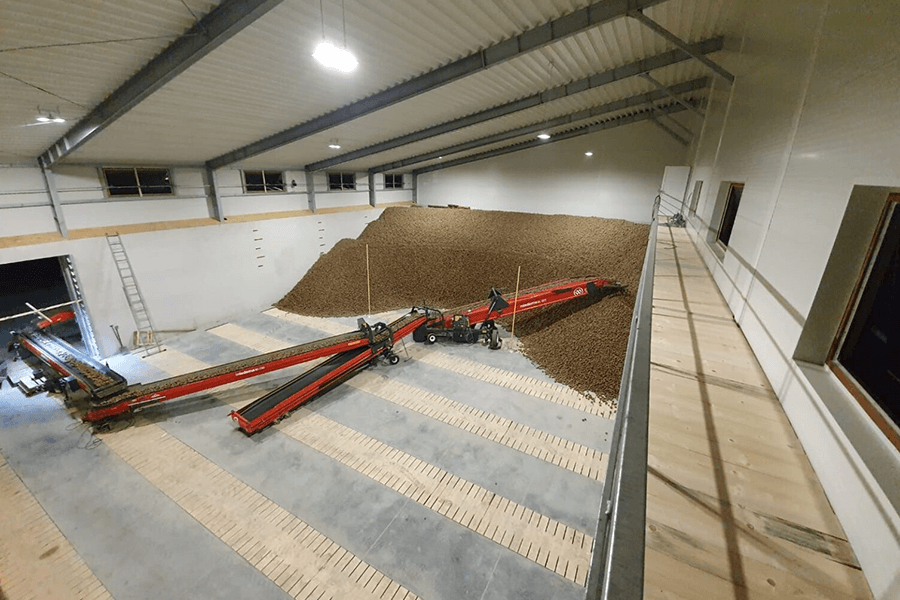
With the sudden surge in demand for pet food formulations, supply chain risks on the raw materials side have repeatedly caused headaches for pet food brands in recent years. The core crises stem from: reduced sweet potato yields due to weather conditions in growing regions; batch recalls caused by microbial contamination exceeding limits at small and medium-sized sweet potato flour mills; and sky-high price speculation in the spot market during periods of supply shortages.
As a result, leading pet food groups have completely abandoned pure trading intermediaries when screening suppliers and have shifted their focus to “source factories” with substantial capital assets. For example,Junsheng Technology has built its own 100,000-metric-ton smart temperature-controlled warehouseBy securing a massive supply of high-quality raw potatoes during the fall harvest season, we not only ensure absolute stability in factory-gate prices throughout the year, but also fundamentally eliminate the risk of supply disruptions that could leave major clients“ production lines ”running out of raw materials.” In today’s market, where high-end pet food brands place immense importance on consistent quality control, a robust, capital-intensive supply chain infrastructure serves as the strongest shield for a brand’s sustained expansion.