
在Value-Added Processing of Potato FlourIn production lines, the highest-risk areas for microorganisms are often not in the air, but within the intricate network of pipe walls. The liquid potato puree produced after the pre-cooking and cooking processes typically has a dry matter concentration ranging from 18% to 25% and is rich in highly gelatinized starch and soluble sugars. This highly adhesive slurry environment allows microorganisms to multiply at a rate far exceeding that of typical food processing conditions.
When dealing with organic scale (precursors to biofilm), which forms very easily, the traditional method of “manual disassembly and cleaning” is not only extremely inefficient but also a quality risk that frequently leads to complaints, as it is impossible to verify that all hard-to-reach areas have been cleaned. The introduction of advancedCIP Cleaning System for Food Processing Plants(Clean In Place) is an essential step toward achieving international compliance.
I. Microbial Risks Posed by Traditional Manual Cleaning in All-Powder Piping Networks
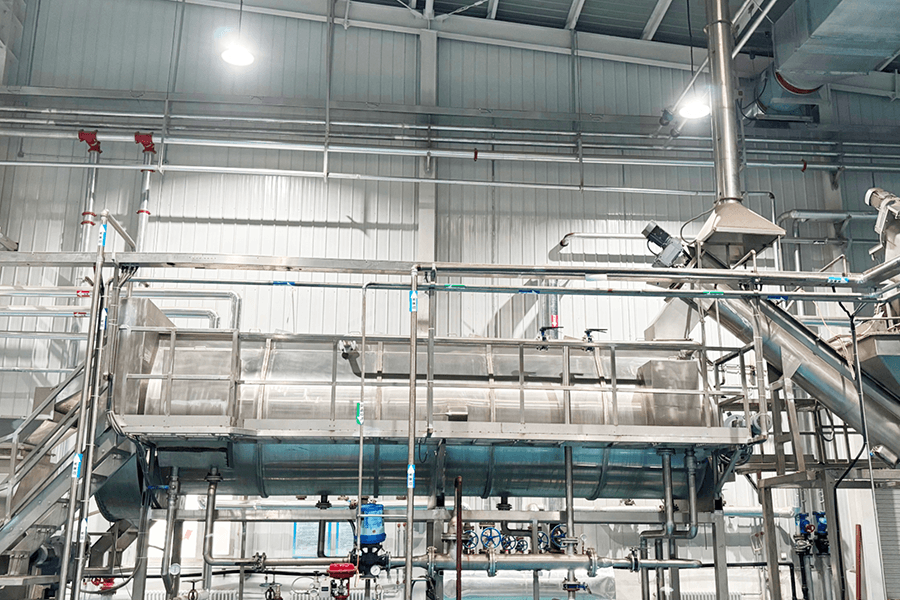
Relying on manual labor—using high-pressure water jets and brushes to deal with highly viscous, gelatinized mashed potatoes—has five major systemic flaws under modern industrial standards:
-
1
Blind spots (Dead Legs) cannot be quantified
Liquid mashed potatoes can form stagnant pockets in bends, tees, valve cavities, and on the back of pump impellers. Manual disassembly and cleaning are limited by the availability of tools and visibility, making it extremely difficult to thoroughly clean these hidden areas, which provide an ideal haven for pathogens to colonize.
-
2
Frequent disassembly and reassembly can lead to secondary contamination
Every time a pipe flange is disassembled and reassembled, it creates an opportunity for external microorganisms to enter the system. Operators’ tools, gloves, and even airborne microorganisms in the workshop can recontaminate the cleaned pipes during reassembly.
-
3
Cleaning results cannot be recorded or tracked
Manual cleaning relies on “checklist-style” paper logs and lacks real-time records of key thermodynamic parameters such as cleaning water temperature, alkali solution concentration, and contact time. This proves inadequate when facing third-party quality audits.
Laboratory tests have shown that in residues from a mashed potato pipeline that had not undergone CIP treatment (under operating conditions of approximately 35–45°C), the number of Gram-positive coccus colonies can surge from an initial 10³ to over 10⁷ CFU/cm² within 24 hours, far exceeding the safety threshold for food-contact surfaces.
II. Microbial Control in Whole-Grain Flour Production Lines: Operating Logic of Automatic CIP Acid and Alkali Cycles
The core design philosophy of the CIP system is to use a high-pressure pump to circulate the cleaning solution, thereby creating a closed-loop system within the piping.A state of severe turbulence(Reynolds number Re ≥ 20,000), utilizing the synergistic effects of powerful mechanical scouring, chemical dissolution, and thermal energy to thoroughly remove residues from the pipe walls.
(40–50°C, 10 min)
(NaOH at 85°C dissolves organic compounds)
(Online Conductivity Monitoring)
(Removes calcium and magnesium mineral deposits)
(ATP Fluorescence Verification)
Tips for Parameter Tuning:Because the free starch in mashed potatoes tends to become sticky when heated, the temperature during the alkaline washing stage must be maintained at 75°C–85°C between, and the circulation flow rate in the alkali solution pipe must not be less than 1.5 m/s...only then can the organic macromolecular film adhering to the stainless steel wall be completely destroyed.
III. Breaking Through the Biofilm: Thoroughly Eliminating Staphylococcus aureus and Salmonella
In potato processing environments,Staphylococcus aureus (S. aureus)与Salmonella (Salmonella spp.)These are the two main types of pathogenic bacteria that are closely scrutinized during export compliance audits. Their most dangerous weapon is the formation of a layer on stainless steel surfacesBiofilm. Once formed, its resistance to conventional disinfectants is 100 to 1,000 times greater than that of the free form.
- The water temperature is unstable, making it impossible to melt the protective polysaccharide matrix.
- The concentration of the cleaning solution is determined entirely by the operator's judgment.
- Physical scrubbing cannot reach deep into the fine weld seams of pipes.
- Biofilm residue can cause production lines to trigger large-scale recalls at any time.
- A high-temperature alkaline solution maintained at a constant 85°C continuously circulates and bombards the substrate.
- High-turbulence scouring forces physically remove plaque.
- Peracetic acid disinfection penetrates into metal crevices at the micrometer level.
- The log reduction value (LRV) against Staphylococcus aureus is consistently ≥ 5.
IV. The Stringent Physical Requirements of the FSSC 22000 Factory Certification Standard
For factories seeking to enter the supply chains of multinational restaurant giants, FSSC 22000 certification is an insurmountable hurdle. Moreover, this system sets extremely high standards for equipment cleaning under the Prerequisite Program (PRP).Hardware Traceability Requirements。
-
1
Specifications for 304 Stainless Steel Piping for Food-Contact Surfaces
All pipes, valves, and pump bodies that come into contact with mashed potatoes must be made of 304 or 316L food-grade stainless steel, and the internal surface roughness Ra ≤ 0.8 μm, to prevent pathogens from forming mechanically embedded colonies on the surface.
-
2
Dead-Angle Design Threshold (L/D ≤ 2)
Pipe design must eliminate dead legs (where the length-to-diameter ratio must be less than or equal to 2). All elbows must be sanitary-grade wide-angle elbows, and valves must be non-stagnant diaphragm valves or sanitary-grade butterfly valves to ensure that the CIP solution can thoroughly wash over the entire inner surface.
-
3
SCADA Online Monitoring and Tamper-Resistant Archiving
The CIP system must be configured with flow meters, temperature probes, and conductivity meters, with data transmitted directly to the PLC central control system. A curve chart is automatically generated for each cleaning cycle and annotated with a digital timestamp; these records are archived for at least 12 months, fully addressing the documentation traceability requirements of third-party auditors.
Although the initial capital investment for a complete CIP system runs into the millions, the payback is clear: cleaning downtime is reduced by more than 50% (directly recovering effective production capacity); water and chemical consumption are reduced by approximately 30% thanks to a precise closed-loop system; most importantly, annual incidents of microbial contamination have been reduced to “zero,” avoiding extremely costly product returns and damage to brand reputation.