
Why are potato granules and potato flour suitable for restaurant chains, institutional dining, and central kitchens?
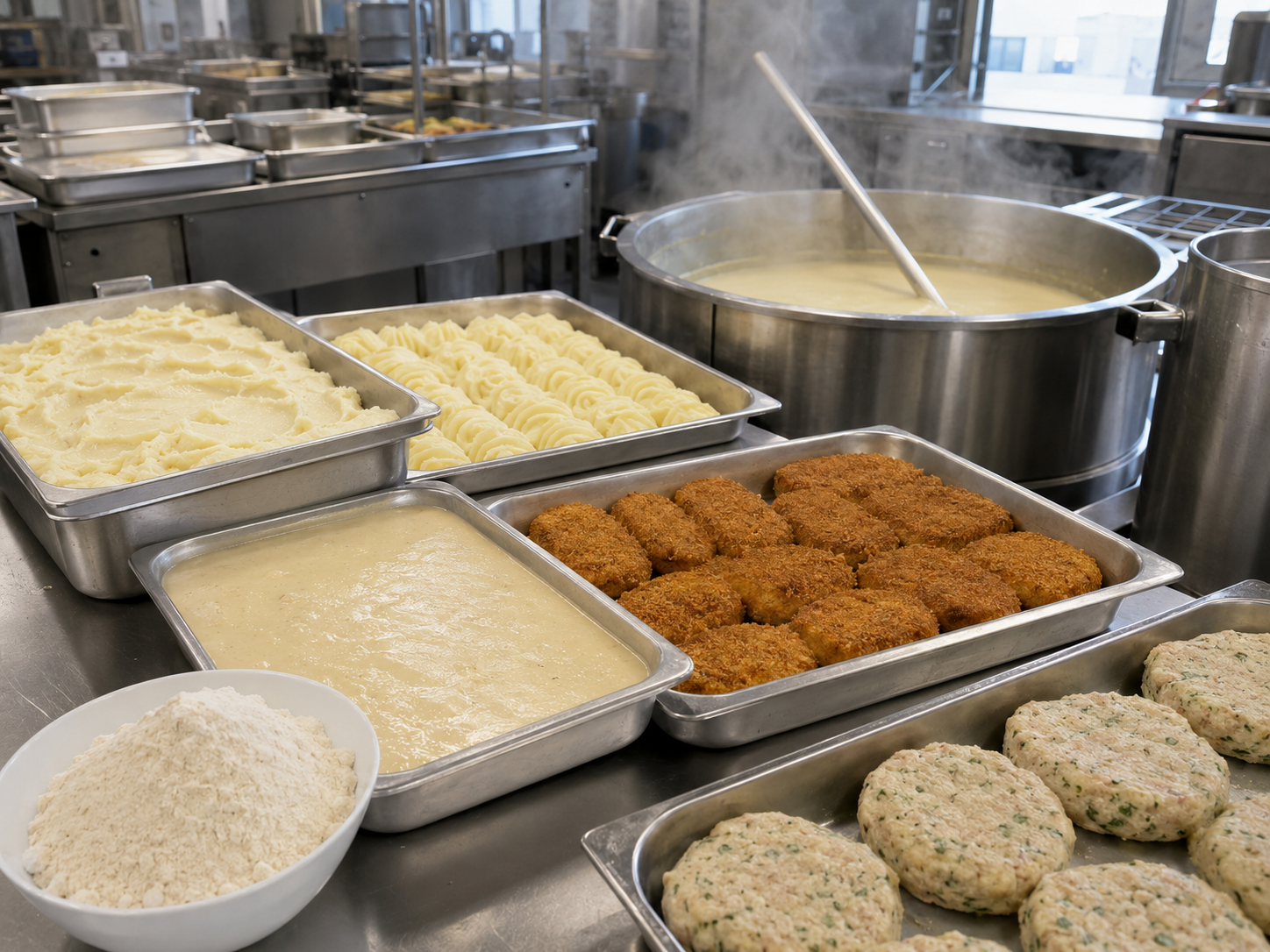
Anyone in the restaurant business understands one thing: great taste is just the bare minimum; consistency, reliability, and scalability are the true keys to running a chain, providing group meals, and expanding operations. Take mashed potatoes, potato purée, or a bowl of creamy potato soup, for example: Restaurant A might serve them with a smooth, creamy texture, while Restaurant B’s version might be watery and insipid. This might not matter much for a single location, but across a chain of hundreds of restaurants, it becomes a disaster.
That is precisely why an increasing number of restaurant chains, contract catering companies, and central kitchens are turning their attention to potato granule flour. Unlike snowflake-type potato flour, which is used in large quantities at low cost in potato chips and puffed snacks, this product takes a “high-reconstitution, great taste” approach—one that perfectly addresses the pain points of large-scale food service operations.
Let's get one thing straight: What's the difference between granulated whole milk powder and flaked whole milk powder?
To understand why it’s a good fit for the restaurant industry, you first need to know what makes it so valuable.
There are two main types of whole potato flour: snowflake whole potato flour and granulated whole potato flour.Snowflake All-Purpose FlourIt is produced using the drum drying method. The processing involves relatively rough handling, which causes a large number of potato cells to rupture, resulting in high levels of free starch and strong viscosity. It is low-cost and suitable for industrial products that require shaping, such as potato chips and puffed snacks.
Granules and Whole PowderIt follows a different production process. By using a gentler drying method, the integrity of the potato cells is preserved as much as possible, resulting in less free starch. What does this mean? It means that after rehydration,The rehydrated mashed potatoes have a texture closer to that of freshly steamed and mashed potatoes.: Soft, sandy, with a grainy texture; not sticky, not powdery or clumpy.
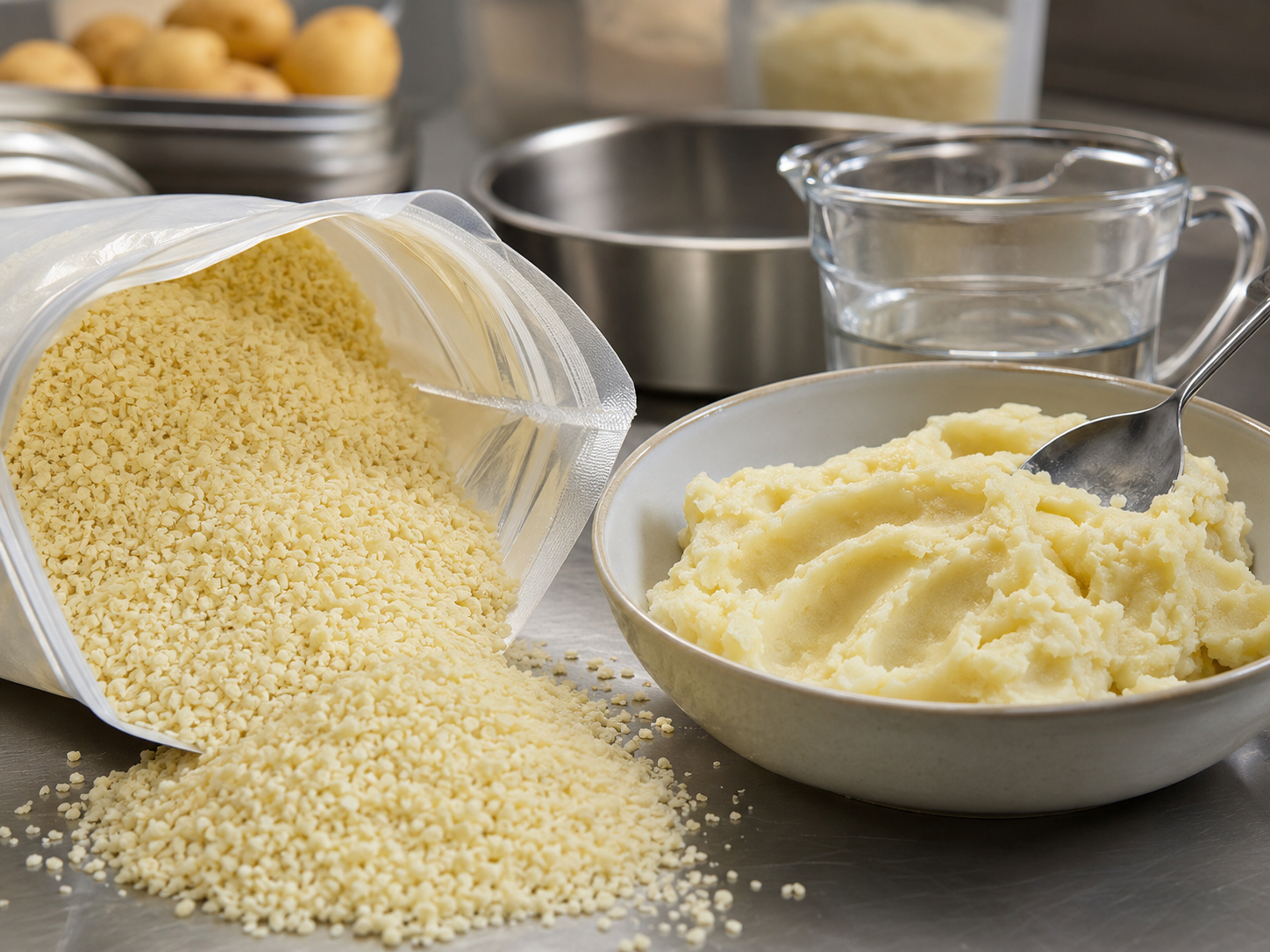
Granular and Powdered Raw Materials
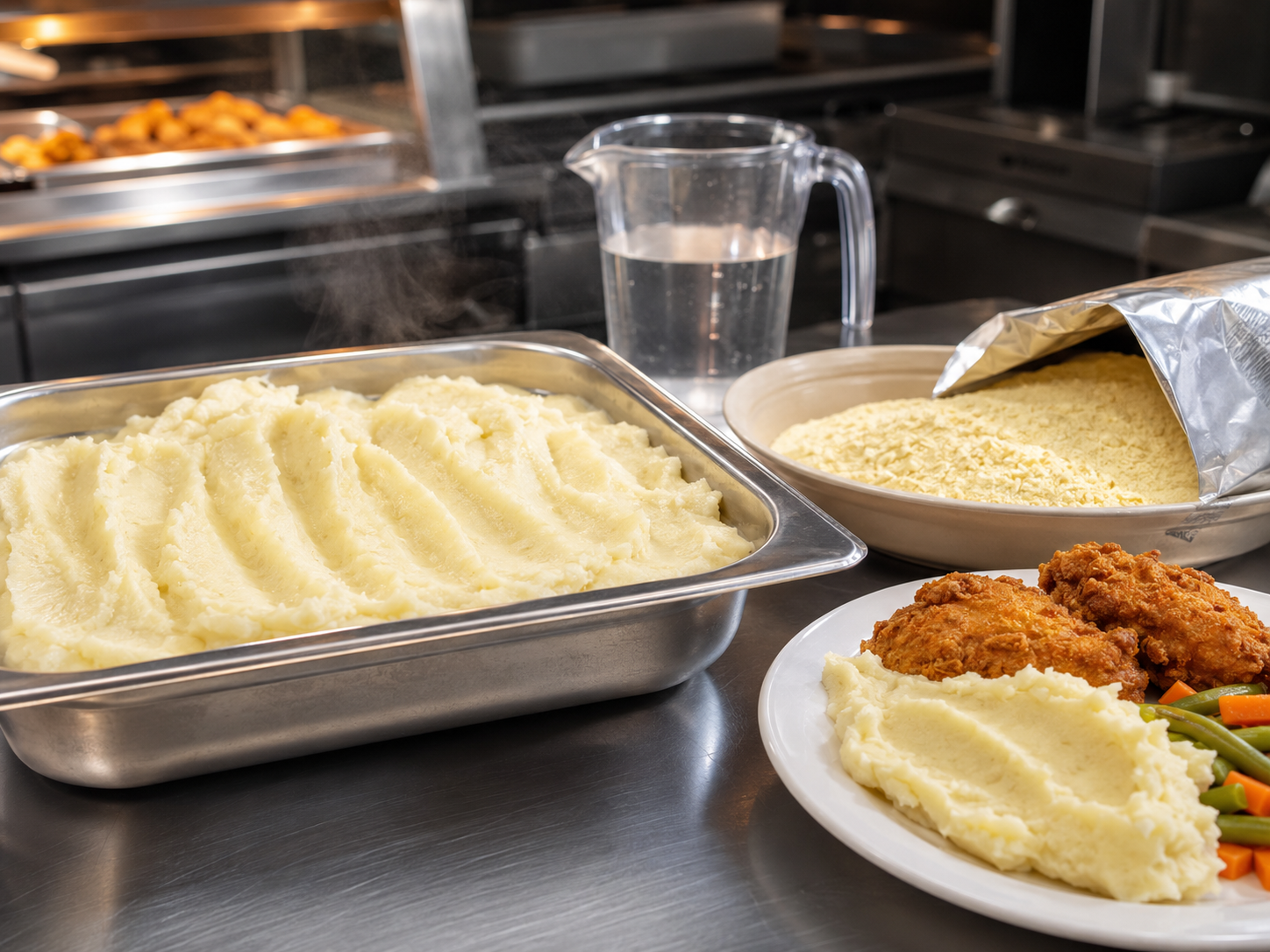
Restores the original taste after rehydration
High-fidelity
Once rehydrated, it closely resembles freshly mashed potatoes, making it ideal for reheating and serving in restaurants and central kitchens.
Standardization
Rehydrate ingredients using a fixed ratio to minimize variations in taste among different chefs and across different locations.
Pre-processing
No need to wash, peel, steam, or mash—just rehydrate and use.
Low loss
Minimize losses caused by the storage, sprouting, peeling, and seasonal fluctuations of fresh potatoes.
Reason 1: Consistently high-quality products—this is the lifeblood of a chain
What do restaurant chains fear most? They fear “a different taste at every location.” With variations in chefs’ skills, differences in potato quality, and inconsistencies between batches—sometimes mushy today, hard tomorrow—the customer experience becomes unpredictable.
Using granulated potato flour effectively “locks in” the “quality of the potatoes” right from the raw material stage. It is a standardized, ready-to-use powder, with every bag having the same dry matter content, texture, and rehydration ratio. All a store needs to do is add water at a fixed ratio, heat it, and stir—whether in Beijing or Guangzhou, and whether the person preparing it is a novice or a seasoned pro—the mashed potatoes will always have the same flavor and the same velvety texture.
This “plug-and-play” replicability is precisely the fundamental requirement for chain expansion. You can think of it this way: the pre-mixed powder “encapsulates” the chef’s skills within the ingredients, so that each store is only responsible for recreating the dish, not for adding its own creative touches. From the headquarters’ perspective, this is a far more reliable way to control quality than training a hundred chefs.
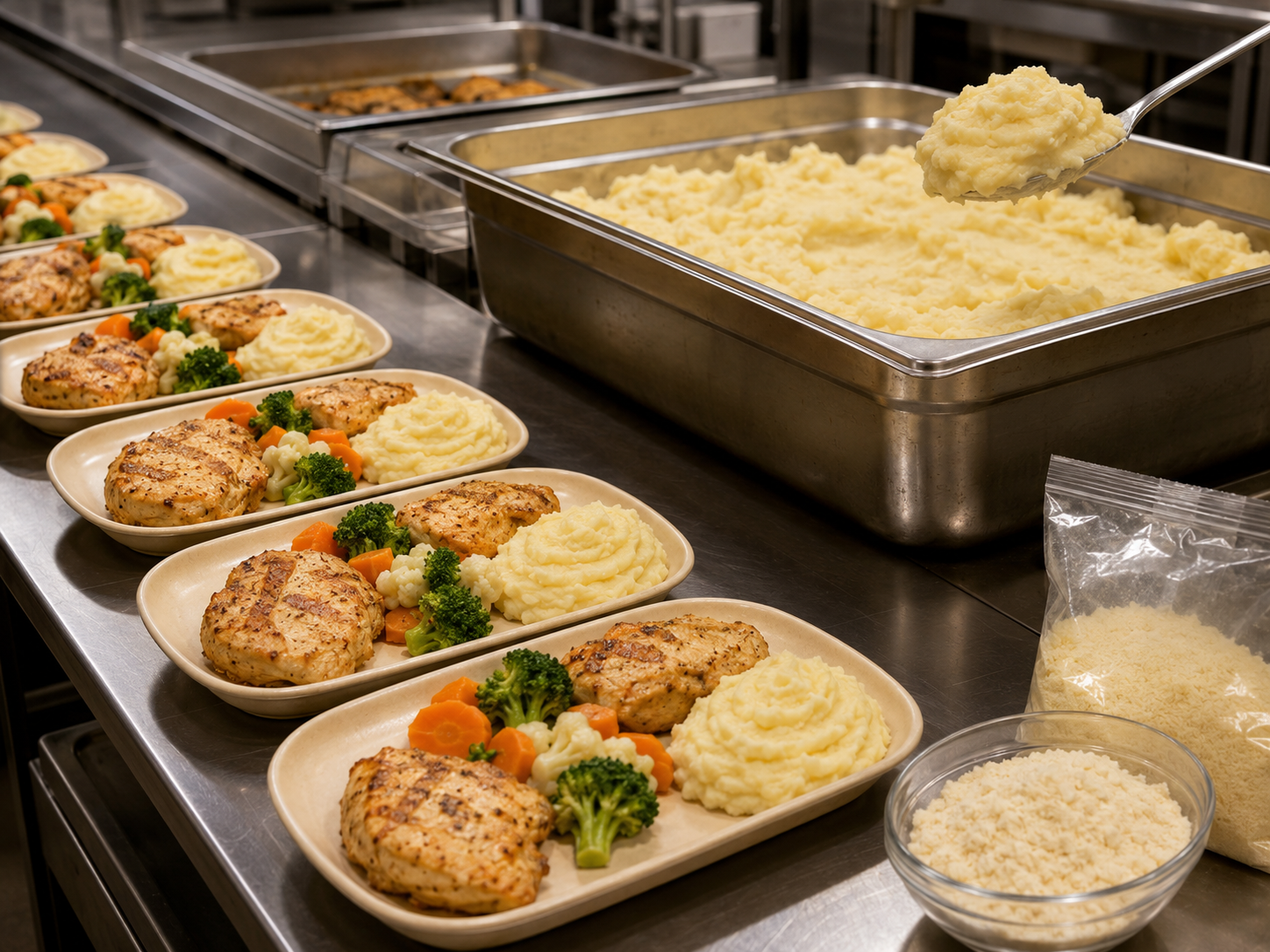
Reason 2: By eliminating pre-processing, labor costs and waste are significantly reduced
The two biggest cost drivers in the food service industry are ingredients and labor. The traditional process for making mashed potatoes is as follows: inspecting the potatoes, washing them, peeling them, removing the eyes, steaming or boiling them, mashing them, and seasoning them. This entire process consumes water, electricity, and labor, and there is significant waste from peeling and cooking. Of a bag of potatoes, only about 70 to 80 percent may actually be usable.
Granulated powder eliminates all of the previous steps. The raw material arrives at the store as a bag of dry powder—it takes up little space, requires no refrigeration, has a long shelf life, and can be reconstituted with water when needed. There’s no need for peeling, no steaming or boiling time, and no waste from trimmings, saving both kitchen space and labor.
For group catering—where hundreds or even thousands of servings must be prepared at once and maximum efficiency is essential—this advantage is particularly decisive. Group catering involves slim profit margins, high volume, and tight deadlines; it’s simply not feasible to peel and steam hundreds of jin of potatoes on the spot. Whole-grain potato flour is virtually the only solution that can meet the requirements of “high volume, speed, and acceptable texture.”
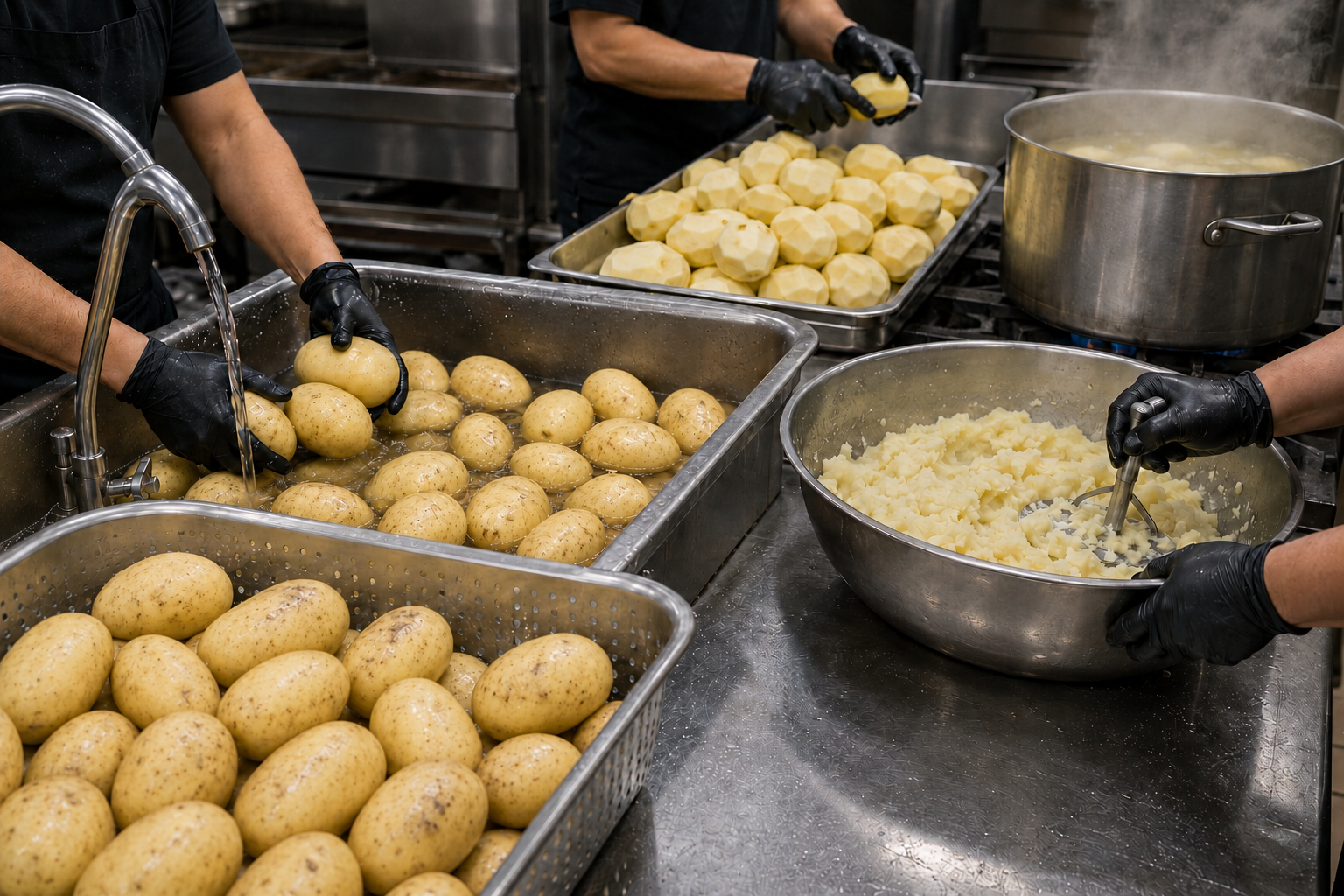
Traditional Fresh Potato Processing
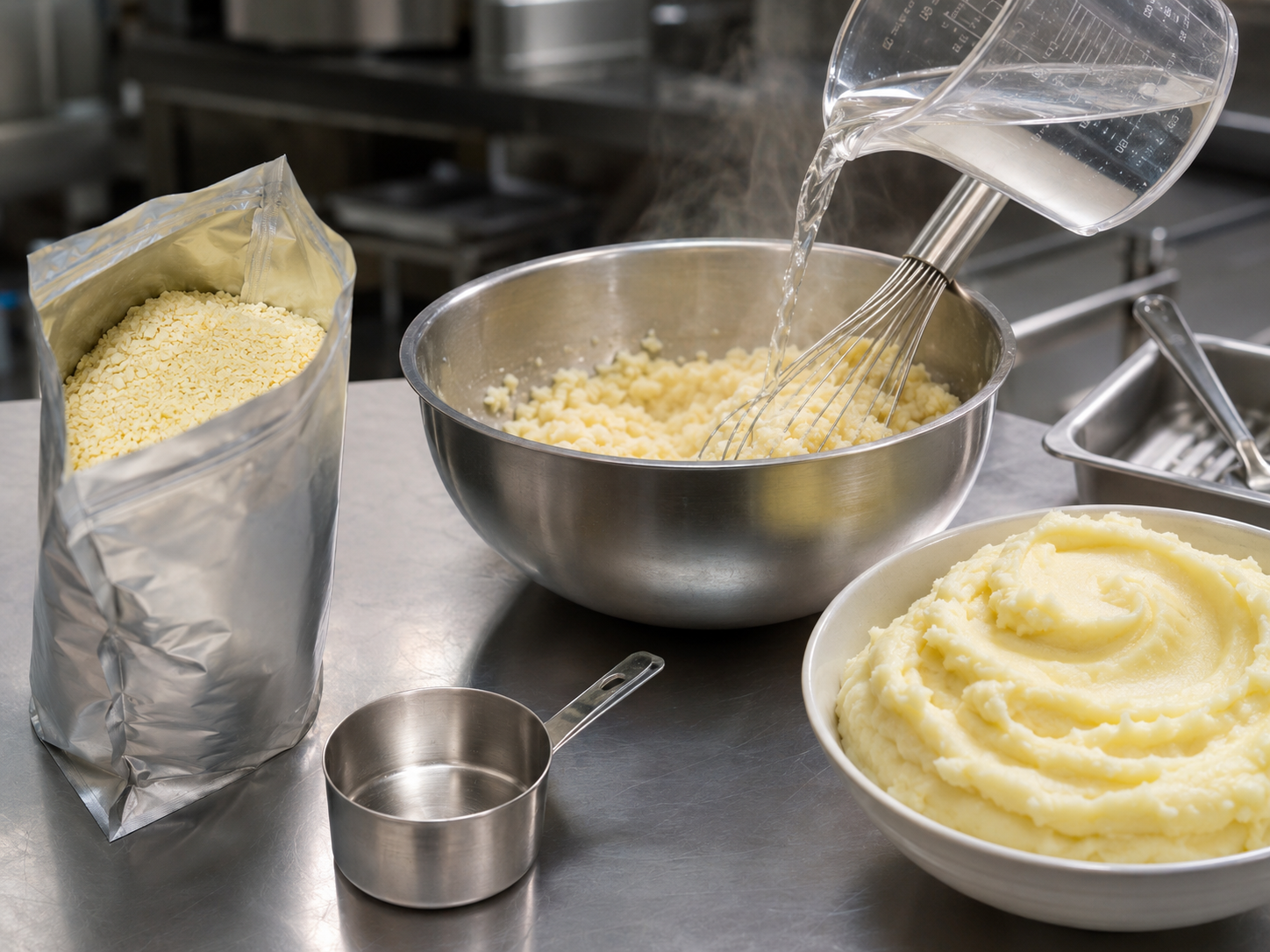
Rapid Rehydration of Granular Whole Powder
Reason 3: Better suited for storage and distribution in a central kitchen
For a central kitchen, the most important factor isn’t how beautifully a meal is prepared, but whether the supply chain runs smoothly. Although fresh potatoes are inexpensive, they take up storage space, are prone to sprouting and rotting, are susceptible to seasonal fluctuations, and are subject to wastage during transportation and storage.
Granulated powdered ingredients are dried products that take up less space, have a longer shelf life, and require simpler storage conditions. For central kitchens that need to continuously supply meals to multiple stores, schools, factories, or hospitals, they can significantly reduce the burden of procurement, storage, and distribution.
More importantly, it’s easier to manage the formulations for granulated potato powder. Once headquarters sets the rehydration ratio, seasoning ratio, and heating process, it can create standardized process sheets for products such as mashed potatoes, potato soup, and mashed potato fillings, which stores can then follow.
Reason 4: The taste is closer to that of freshly made food, resulting in higher customer acceptance
In the food service industry, efficiency isn’t the only factor to consider. If you cut costs but the food doesn’t taste good, customers won’t buy into it. Compared to regular snowflake potato flour, the greatest value of granulated potato flour lies in the fact that, once rehydrated, it more closely resembles the texture of mashed potatoes that are “steamed and mashed fresh.”
It isn’t overly sticky, nor does it turn into a powdery, mushy mass; instead, it retains a certain texture and graininess. When used in mashed potatoes, potato purée, potato soup, fillings, or as a side dish, it tastes more like real potatoes, making it ideal for restaurant brands that emphasize quality.
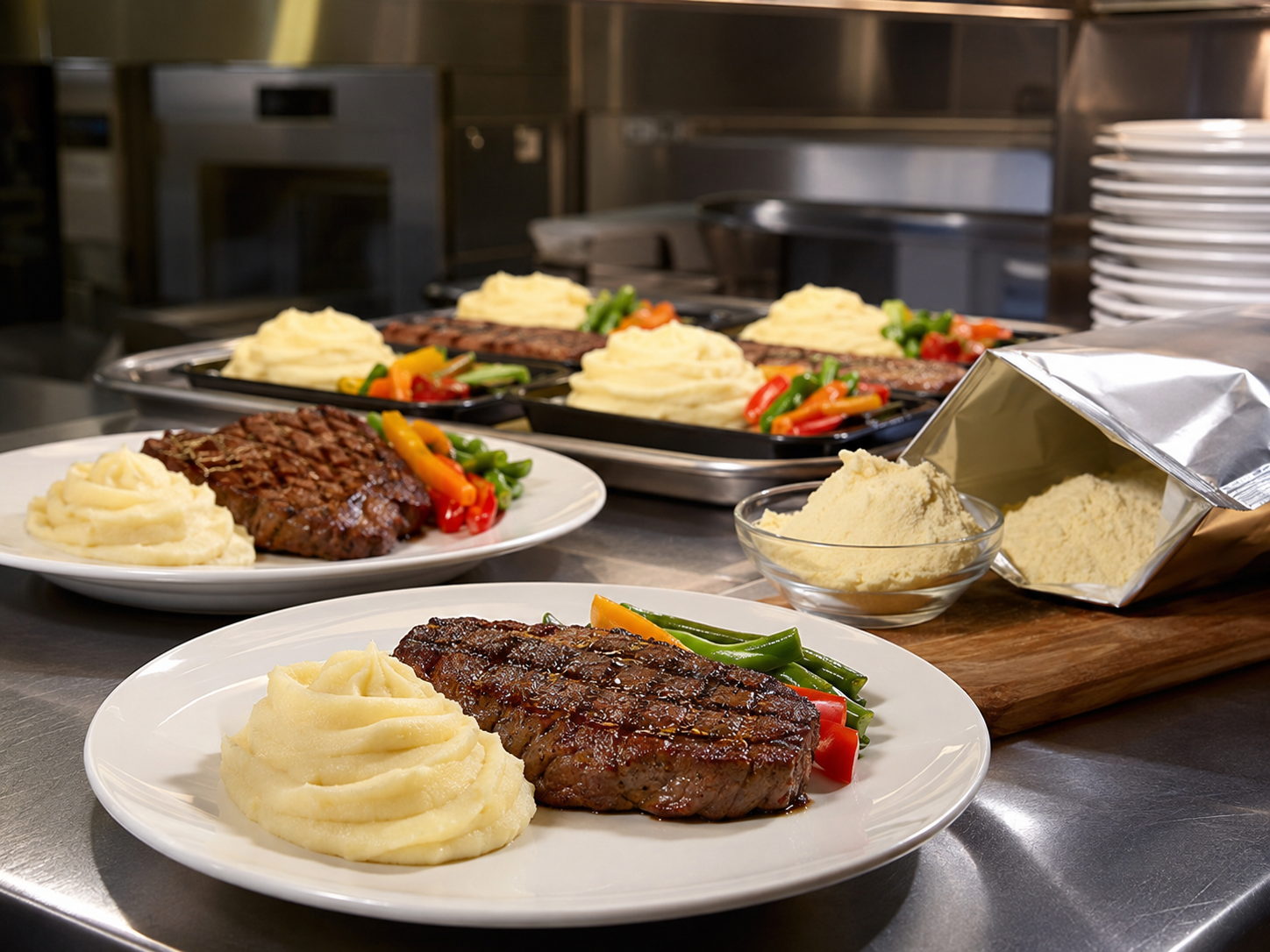
What types of food and beverage products is it suitable for?
In restaurant chains, institutional dining, and central kitchens, potato granule flour can be used in many products that appear different but share the same underlying principles.
- Side Dishes for Western-Style Restaurant Chains and Fast-Food Chains: Mashed potatoes, potato purée, creamy mashed potatoes, side dish for steak.
- Pre-prepared Semi-Finished Products from a Central Kitchen: Potato filling, potato patty mix, croquettes, potato soup base.
- Group Meals and School Meals: For large-scale production of mashed potatoes, potato soup, side dishes, or ingredients for nutritious meals.
- Baked Goods and Fillings: Potato bread fillings, savory fillings, and frozen ready-to-cook fillings.
Conclusion
Let’s return to the original question: Why are potato granules and potato flour suitable for restaurant chains, institutional dining, and central kitchens?
The answer is actually quite clear. The core objective of large-scale food service isStable, efficient, scalable, and cost-effective, and the granulated powder happens to meet all these criteria: it ensures consistent product quality, making it possible for every store to serve the same taste; it eliminates the need for pre-processing, saving on labor and reducing waste; it’s compact and durable in storage, lightening the burden on warehousing and logistics; it serves multiple purposes, streamlining the supply chain; and most notably, while achieving all of this,Without sacrificing that “freshly made” taste for customers。
Key Takeaways
In today’s restaurant industry—where competition is intensifying, labor costs are rising, and chain expansion is accelerating—solutions like “granulated potato starch,” which “encapsulate a chef’s expertise into the ingredients,” are bound to be adopted by an increasing number of large-scale food service operators. Ultimately, what they’re selling isn’t just a bag of potato starch, but a comprehensive solution for reducing costs, improving efficiency, and ensuring consistent quality.