
Quick-frozen dumplings, tangyuan, and premium fresh-chilled noodles are the core product categories of China’s cold-chain food industry. However, quality degradation throughout the cold chain has long plagued both producers and consumers. Traditional recipes based primarily on pure wheat flour often lead to extremely difficult-to-handle customer complaints after undergoing multiple freeze-thaw cycles during storage and logistics. Seeking efficientApplications of Whole Potato Flour in NoodlesThese solutions have become the key to breaking through challenges for large-scale staple food factories.
I. The Fatal Flaw of the Traditional Cold Chain: Cracking of the Dough on Quick-Frozen Dumplings and Moisture Loss in Noodles
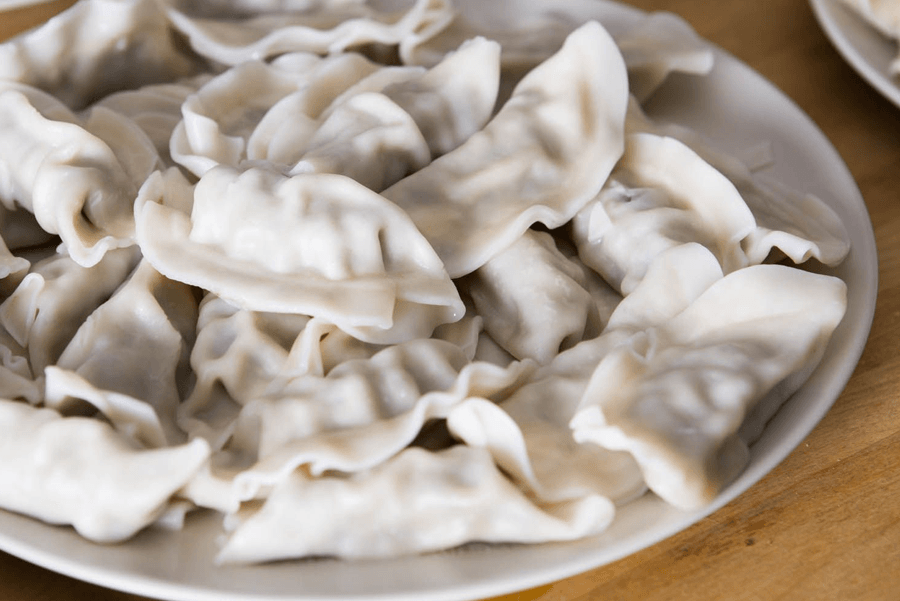
Traditional frozen noodles face two major challenges in the cold chain:
-
1
Freeze cracking: Physical damage caused by ice crystal growth
During the quick-freezing process, free water within the dough forms ice crystals below 0°C, causing a volume expansion of approximately 9%. If the dough lacks sufficient water-holding capacity, a large amount of free water migrates to the surface, where ice crystals accumulate and cause the structure to rupture; during thawing and cooking, water loss leaves behind voids, causing the rate of ruptures to skyrocket. Therefore,Solutions for Cracked Skins on Frozen DumplingsThe key lies in reducing the migration of free water.
-
2
Broken Chilled Fresh Noodles: Cumulative Damage from Cold Chain Fluctuations
Inevitable temperature fluctuations in cold-chain logistics (such as repeated cycles between -18°C and -12°C) can trigger “ice crystal recrystallization.” As free water continuously seeps out, the surface of fresh-chilled noodles turns white and becomes brittle due to moisture loss, causing the breakage rate to increase by more than three times after cooking.
In the past, factories relied on chemical antifreeze and moisture-retaining agents such as sorbitol, phosphate blends, or propylene glycol. However, this approach seems extremely reactive in light of today’s consumer trend that favors “the shorter the ingredient list, the better.” FindingReplacing Natural Freeze Inhibitors in FlourProduct development and the adoption of "clean label" principles have become key criteria for high-end frozen foods to capture market share.
II. Molecular Mechanism of Gluten-Enhancing and Freeze-Resistant Properties: How Amylopectin Interacts with Gluten to Form a “Freeze-Resistant Network”
The core mechanism behind the ability of whole potato flour (granular or snow-white flour) to provide perfect physical frost resistance lies in the synergistic action of two types of substances:An extremely high proportion of amylopectin与Naturally Phosphorylated Starch. They interlock with wheat gluten proteins, reshaping the strength of the dough at the molecular level.
(Amylopectin + phosphate groups)
Form a dense, interconnected network
Significantly reduce the free water content
Maintain the structural integrity of the aspic after setting
Hydrogen-Bond Cross-Linking of Amylopectin: Potato starch has a branched-chain ratio of approximately 79%, which is significantly higher than that of wheat starch. A high branched-chain ratio means that more hydroxyl groups are exposed to the aqueous phase; during dough maturation, these groups form hydrogen bonds with gliadins, creating a denser three-dimensional network than that found in pure wheat flour.
Electrostatic binding of phosphate groups: In addition, potato starch naturally contains negatively charged phosphate ester groups. These hydrophilic groups strongly bind water molecules, transforming them into “bound water.” At -18°C, this bound water is unable to form destructive ice crystals, thereby fundamentally reducing the ice crystal nucleation density.
III. Verification of Key Data: Significant Reduction in Breakage and Damage Rates
In search of the perfectFormula for Preventing Broken Noodles in Chilled Fresh NoodlesWhen developing a freeze-resistance solution for dumplings, we mixed potato flour into standard wheat flour in the specified proportions to conduct production-scale freeze-thaw cycle testing (Freeze-Thaw Weight Loss).
| Key Performance Indicators | Pure Wheat Flour Control Group | Add 15% potato flour | Add 25% potato flour |
|---|---|---|---|
| Freeze-Thaw Weight Loss Rate (3 Cycles) | 4.2 ± 0.31 TP3T | 2.8 ± 0.21 TP3T | 1.9 ± 0.21 TP3T |
| Cracking Rate of Frozen Dumpling Wrappers | 18.5% | 9.2% | 4.8% |
| Breakage Rate of Chilled Fresh Noodles During Steaming and Boiling | 6.3% | 3.1% | 1.8% |
| Sensory Evaluation (Elasticity After Reheating) | 6.8 / 10 | 7.9 / 10 | 8.4 / 10 |
The data shows that as the substitution rate of whole-grain flour increases, frost resistance continues to improve. However, it is important to note that if the substitution rate exceeds 30%, the wheat gluten proteins become overly diluted, which can actually reduce the dough’s extensibility and lead to irregular edges during sheeting. In this case, it is essential to supplement the dough accordingly. 2–4% Gluten Powder (Active Wheat Protein)Perform formula balancing.
IV. Guidelines for Optimal Addition Ratios for Different Categories of Noodle Products
Based on extensive validation through large-scale production, the optimal addition ranges for potato flour in various types of frozen noodle products are as follows and can serve as starting points for food manufacturers to upgrade their formulations:
Focus on improving issues related to freezing cracks and bursting during steaming. When using the “thin wrapper, generous filling” method, it is recommended to set the lower limit to 15% to ensure sufficient elasticity and stretchability of the wrapper.
The anti-breakage effect reaches its maximum marginal benefit at around 15%. During processing, it is recommended to extend the proofing time by 10 minutes to ensure that the whole-grain flour is fully hydrated and absorbs water.