
Why is potato snowflake flour commonly used in composite potato chips and puffed snacks?
When you open a bag of mixed potato chips, the very first ingredient listed is almost always “whole potato snowflake flour.” Many people assume that potato chips are simply made by slicing potatoes and frying them, but in fact, a significant portion of the potato chips on the market—especially those with uniform shapes, stacked one on top of the other in a tube—aren’t sliced at all. Instead, they’re made by “kneading, shaping, and processing” potato snowflake flour. The same principle applies to puffed snacks.
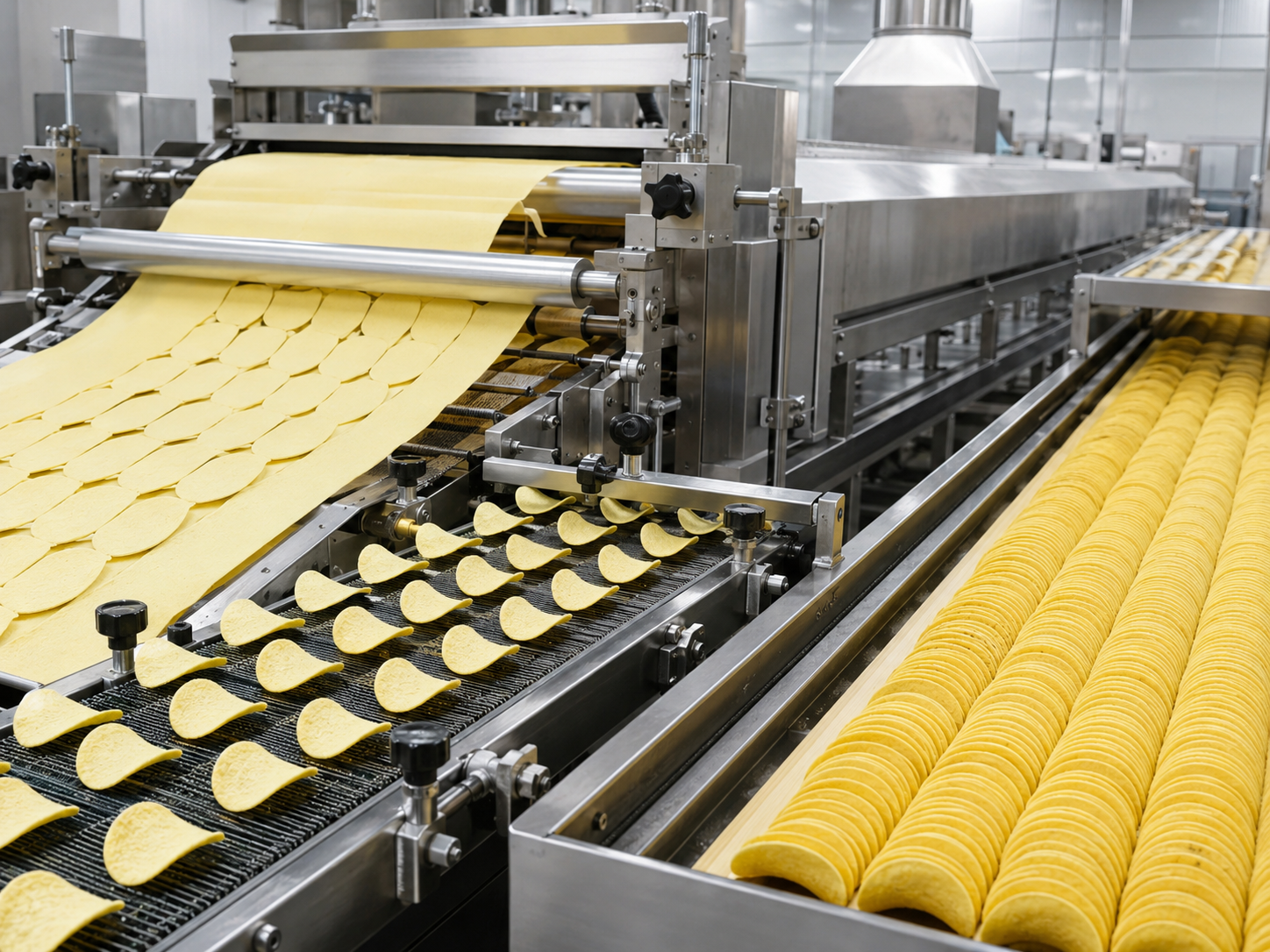
This raises the question: Since there are various types of whole potato flour—such as snowflake-type, granular, and starch—why do composite potato chips and puffed snacks tend to use snowflake-type whole potato flour? This choice isn’t arbitrary; it’s the optimal solution based on a balance of cost, production process, and taste.
First, let's figure out: How are layered potato chips actually made?
To understand why snowflake-shaped potato chips are used, you first need to know that the production process for composite potato chips is completely different from that of traditional fried potato chips.
Traditional potato chips, also known as “original-cut” chips, are made by slicing fresh potatoes into thin slices and frying them directly. They have irregular shapes and vary in size, and their production depends on the potato variety and the season. Composite potato chips take a different approach: potato snowflake flour is mixed with water, starch, and other ingredients to form a dough-like batter, which is then rolled out, shaped, cut into uniform pieces, and finally deep-fried or baked.
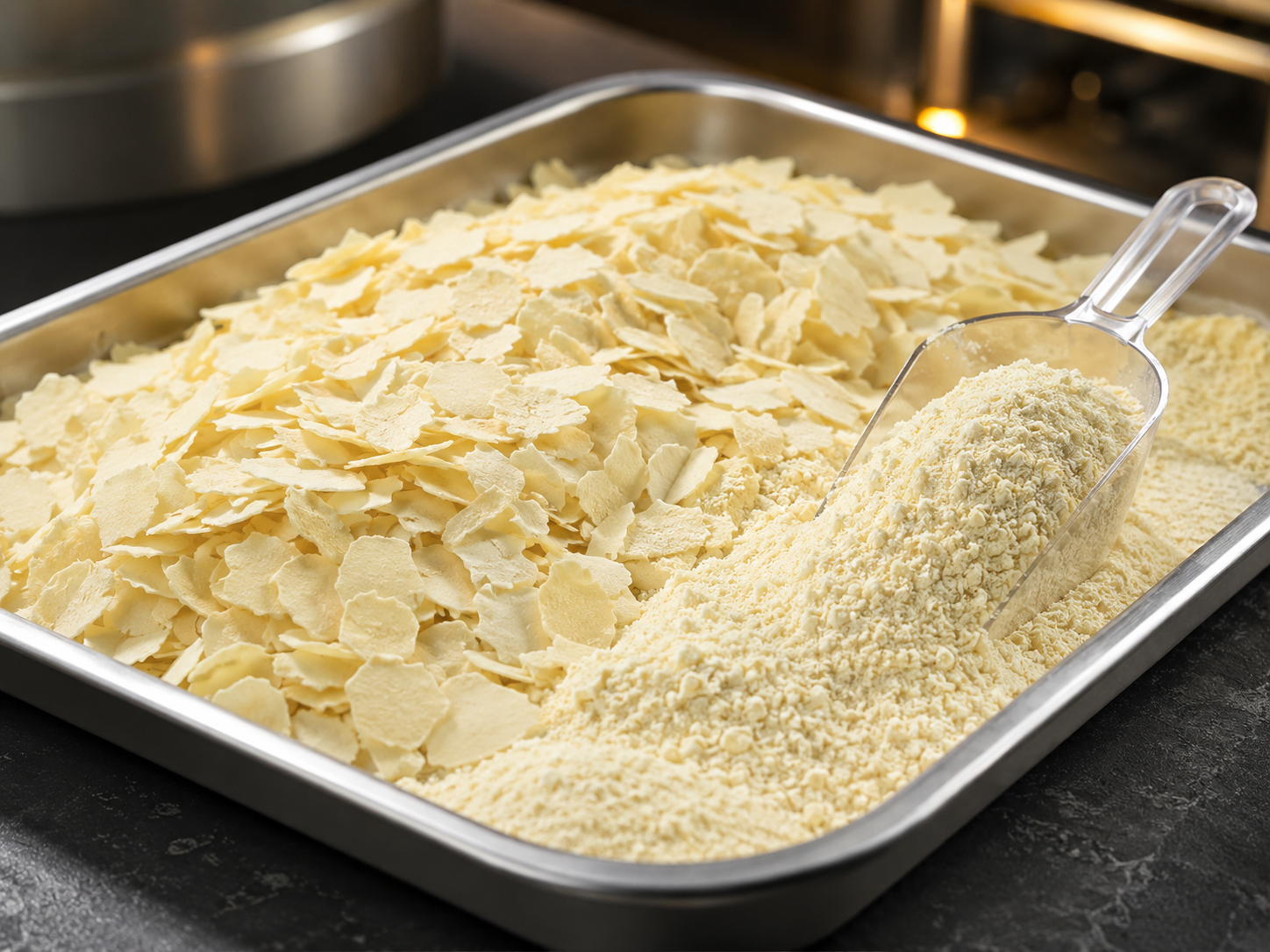
Snowflake All-Purpose Flour
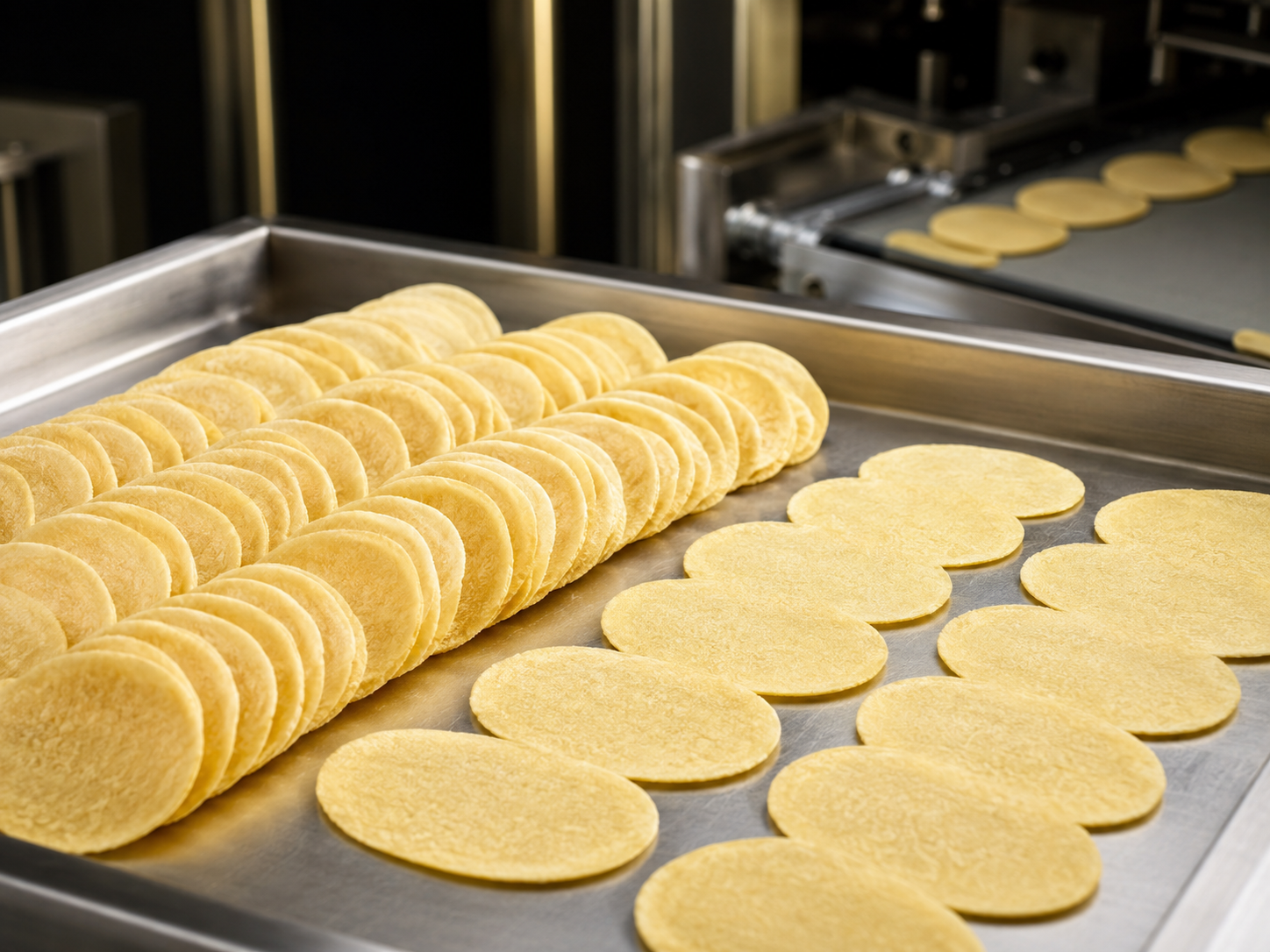
Tablet Compression Results
The entire process is more like “baking cookies” than “frying potatoes.” Because they’re made through a re-forming process, each potato chip is the same size and thickness, allowing them to fit neatly into the can. That’s why every chip in a can of potato chips looks almost identical.
Lower cost
The production process is relatively simple and yields high output, making it suitable for cost-sensitive, mass-market snack foods.
Better molding
With a higher free starch content, the dough is easier to bind, tablet, and maintain a uniform shape.
Faster rehydration
It quickly absorbs water and forms a lump after water is added, which facilitates continuous production and ensures stable parameters.
The flavor is just right.
It preserves the natural flavor of the potatoes without overpowering the seasonings.
Reason 1: Lower costs, making it suitable for large-scale industrial production
This is the most practical point. Although both are whole potato powders, the production process for snowflake whole potato powder is relatively simple: the pre-cooked mashed potatoes are quickly dried on a high-temperature drum, then scraped into flakes and ground into powder—resulting in a high yield and low cost. In contrast, the process for granulated whole potato powder is more complex to preserve cell integrity, leading to higher wastage and a significantly higher price.
Composite potato chips and puffed snacks are both high-volume, mass-market products that are extremely cost-sensitive. If the price of a metric ton of raw materials goes up by a few hundred or even a thousand yuan, that translates into a tangible difference in profit per package. Since these products ultimately undergo frying, seasoning, and puffing—and consumers are looking for crispness and flavor rather than the “highly authentic mashed potato texture”—there’s no need to pay more for premium-grade potato granules that won’t deliver the desired texture.
Reason 2: High free starch content ensures good shaping and strong adhesion
This is the core technical advantage of Xuehua Whole Potato Flour in this type of product. During drum drying, Xuehua Whole Potato Flour undergoes a “more vigorous” process, causing a large number of cells to rupture and release a significant amount of free starch. The higher the free starch content, the stronger the粘性. When making compound potato chip dough, it is precisely this粘性 that binds the flour and other ingredients into a dough that can be rolled out without falling apart.
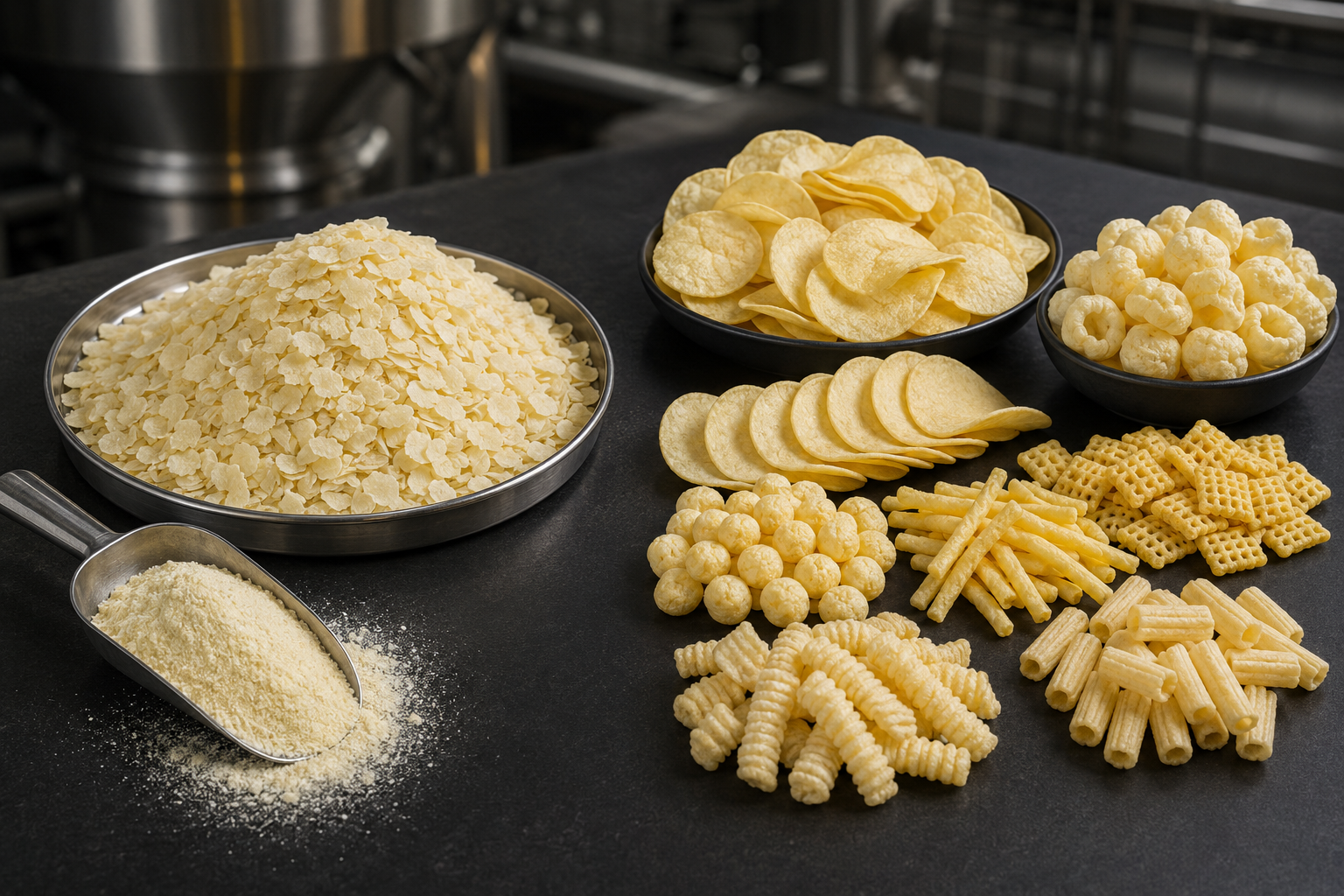
If you switch to whole-potato granules, most of the starch is locked inside intact cells, resulting in less free starch and weaker粘性. The resulting dough is loose, making it difficult to shape, and it tends to crack during rolling—which actually makes it a hassle for making potato chips. Therefore, when it comes to “shaping,” Snowflake Whole Potato Flour transforms what is a disadvantage in mashed potatoes—the fact that the cells are largely intact—into an advantage.
Reason 3: Rapid rehydration and strong processing adaptability
Industrial production emphasizes efficiency and consistency. Snowflake potato flour rehydrates quickly; once water is added, it absorbs it rapidly and forms a dough, shortening the mixing time and keeping pace with the assembly line. Furthermore, it is highly adaptable to various processing conditions. Whether the product is subsequently deep-fried or baked, the dough maintains good expansion and structure, resulting in potato chips that are crispy and do not become soggy.
The same applies to puffed foods. Puffing processes, such as extrusion puffing, require the raw materials to gelatinize and expand under high temperature and pressure. Snowflake Whole Grain Flour’s high free starch content and excellent gelatinization properties perfectly meet the “expansion ratio” requirements of the puffing process, resulting in products that are fluffy, crispy, and light in texture.
Reason 4: Texture and flavor—“good enough is fine”
Some might ask: Since whole-potato powder has a more authentic texture, why not use it to make “premium” potato chips? The answer is quite practical: the texture expectations for blended potato chips and puffed snacks are not meant to “replicate mashed potatoes” in the first place. Consumers want chips that are flaky, crispy, and aromatic, along with the sensory stimulation provided by various seasonings.
In this case, the “highly authentic flavor” that granulated potato powder prides itself on actually has no place here. The potato-based aroma and excellent shaping and puffing properties provided by flaked potato powder are more than sufficient. Since it’s sufficient, inexpensive, and easy to process, manufacturers naturally choose it.
By the way: Which is better—plain potato chips or “fried potato slices”?
There’s often a debate online: Are composite potato chips a “technological marvel,” and are they less healthy and natural than traditionally cut potato chips?
Let me make a couple of objective points here. The advantage of reconstituting blended potato chips using Snowflake whole potato flour is thatConsistent quality, uniform shape, not dependent on the season of raw materials, low waste, and controllable costs...and can be made into various shapes and flavor combinations; whole-cut potato chips have the advantage of “looking like real potato slices,” but they are highly influenced by potato variety, sugar content, and size, resulting in more noticeable variations in appearance and texture from batch to batch.
When should you avoid using snowflake powder?
Of course, Snowflake All-Purpose Powder isn’t a one-size-fits-all solution. If your product’s value proposition changes, your choices should change accordingly:
- Produce high-end products such as authentic-tasting mashed potatoes and baby food that emphasize “the authentic taste and nutrition of real potatoes”...you should use granulated whole-grain flour, or combine it with snowflake whole-grain flour to adjust the cost and texture.
- Products used for making soups, sauces, thickening, and batter—any application that requires thickening properties...It's more economical to use potato starch directly; that way, you don't have to pay extra for the flavor and fiber found in whole-wheat flour.
- For cold-water preparation, no-cook instant meals, or cold-processed meal kits...you might want to consider using pregelatinized potato starch, since it thickens quickly even when mixed with cold water.
- For making composite potato chips, puffed snacks, extruded foods, and preformed dough pieces...Snowflake whole-grain flour is generally more suitable; the key factors to consider are rehydration speed, free starch content, and batch-to-batch consistency.
What Should You Focus On When Purchasing Snowflake Whole Powder?
When purchasing ingredients for composite potato chips and puffed snacks, don’t just ask about the price; instead, focus on several key metrics that will actually impact the production line.
First, check the rehydration rate.Slow rehydration slows down the mixing process and affects continuous production efficiency.Second, check for free starch.It directly affects the binding strength of the tablet blank, tableting stability, and the quality of the finished tablet.Third, check the fineness and whiteness.Particle size affects the uniformity of the mixture, while whiteness and color affect the base color of the finished product.Fourth, check for moisture and microorganisms.This is a matter of storage safety and food compliance.5. Check the batch consistency.If there is too much variation between different batches from the same supplier, production parameters will need to be adjusted frequently.
Conclusion
Potato snowflake flour is commonly used in composite potato chips and puffed snacks—not because it “looks like potato chips,” but because it happens to solve several key challenges in industrial production: low cost, rapid rehydration, good shaping, good adhesion, adequate flavor, and easy batch control.
In other words, Snowflake All-Purpose Flour isn’t designed to recreate the perfect bowl of mashed potatoes; rather, it serves as the foundation for snack food production lines. Whenever the product is positioned as flavored potato chips, puffed snacks, or shaped potato products, it’s often the most practical, stable, and economical choice.