
What Are the Advantages of Sourcing Potato Flour Directly from the Manufacturer? An Analysis from Raw Materials and Production to Consistent Supply
Anyone in procurement has asked questions like these: Why is there such a huge price difference for the same potato flour? Why do some suppliers have stock available today but run out next month? Why does one batch have a soft, sandy texture, while the next batch is sticky?
The root of the problem often lies in a single word—“source.”
There are many products labeled “potato flour” on the market, but there aren’t many that come directly from the “source manufacturer.” When there’s a layer of traders, repackagers, and agents in between, questions arise regarding price, quality, and supply. Today, we’ll break it down step by step—covering raw materials, production, and supply—to explain exactly why sourcing directly from the source manufacturer is so beneficial.
Let’s get one thing straight: What exactly counts as a “manufacturer at the source”?”
The whole-grain flour products currently available on the market can be broadly divided into three categories.
The first category consists of pure traders...I don't manufacture the products myself; I buy them from the factory and resell them, making a profit on the markup.
The second category is repackagers...They buy large bags of raw powder, repackage it in their own bags under their own brand, and make it look like they're the manufacturer, even though they don't actually produce the powder themselves.
The third category consists of the actual manufacturers.—They have their own facilities or stable potato procurement channels, as well as their own production lines; the entire process—from the potatoes entering the plant to the potato flour leaving the plant—is under their own control.
Trader
They primarily earn profits through markups, have limited control over production and raw materials, and are highly susceptible to upstream factors affecting prices and supply.
Repackager
Even when repackaging or selling under a private label, the business still essentially relies on external sources of raw powder.
Direct from the Manufacturer
We have production lines, raw material supply chains, and a quality control system, enabling us to manage quality from the source.
Long-Term Value
The real savings come from reduced volatility costs, communication costs, and supply risks.
Raw Materials: Ensuring Quality at the Very Beginning
When it comes to the quality of potato flour, 70 percent depends on the raw materials and 30 percent on the production process. If the potatoes themselves aren’t up to par, even the best production line can’t save the batch.
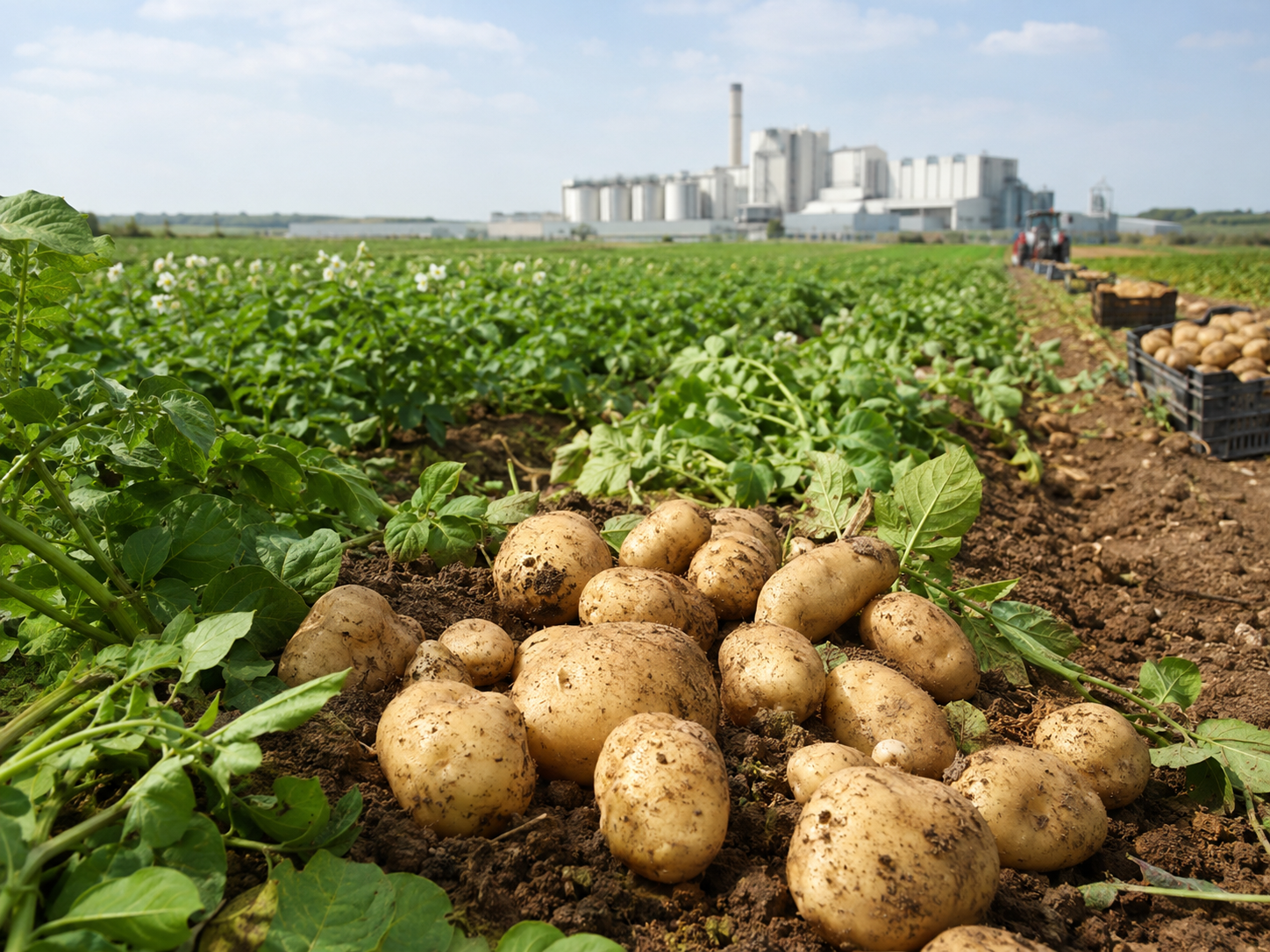
The first advantage of being a direct manufacturer is control over raw materials.Reputable source manufacturers are typically located near major potato-producing regions, such as Inner Mongolia, Gansu, Ningxia, and Yunnan. They either operate their own or partner with farming bases, or have long-term, stable purchase agreements with local farmers. This implies several things:
First, the variety is controllable.When producing potato starch, the choice of potato variety is critical. Only varieties with high dry matter content and low reducing sugar levels can produce high-quality starch that is less prone to browning. Manufacturers should select specialized varieties for processing right from the cultivation stage, rather than simply accepting whatever is available on the market.
Second, freshness is controllable.The shorter the time between harvesting the potatoes and processing them at the factory, the better. Since source manufacturers are located right in the growing regions, potatoes are typically processed locally, ensuring freshness. Raw materials that have changed hands multiple times are stored for longer periods and carry a higher risk of sprouting and turning green, which naturally compromises the quality of the resulting starch.
Third, costs are manageable.Without the multiple markups associated with middlemen, manufacturers are able to source raw materials at a lower cost, and this cost advantage is ultimately reflected in the prices quoted to customers.
In a nutshell:Manufacturers take responsibility for the quality of the potato flour starting from the moment the potatoes are still in the ground.
Production Process: Manufacturing, Quality Control, and Flexible Customization
Now that the raw materials are in place, it’s time to move on to production. This is the stage where traders and repackagers have absolutely no say—only the original manufacturers hold the power.
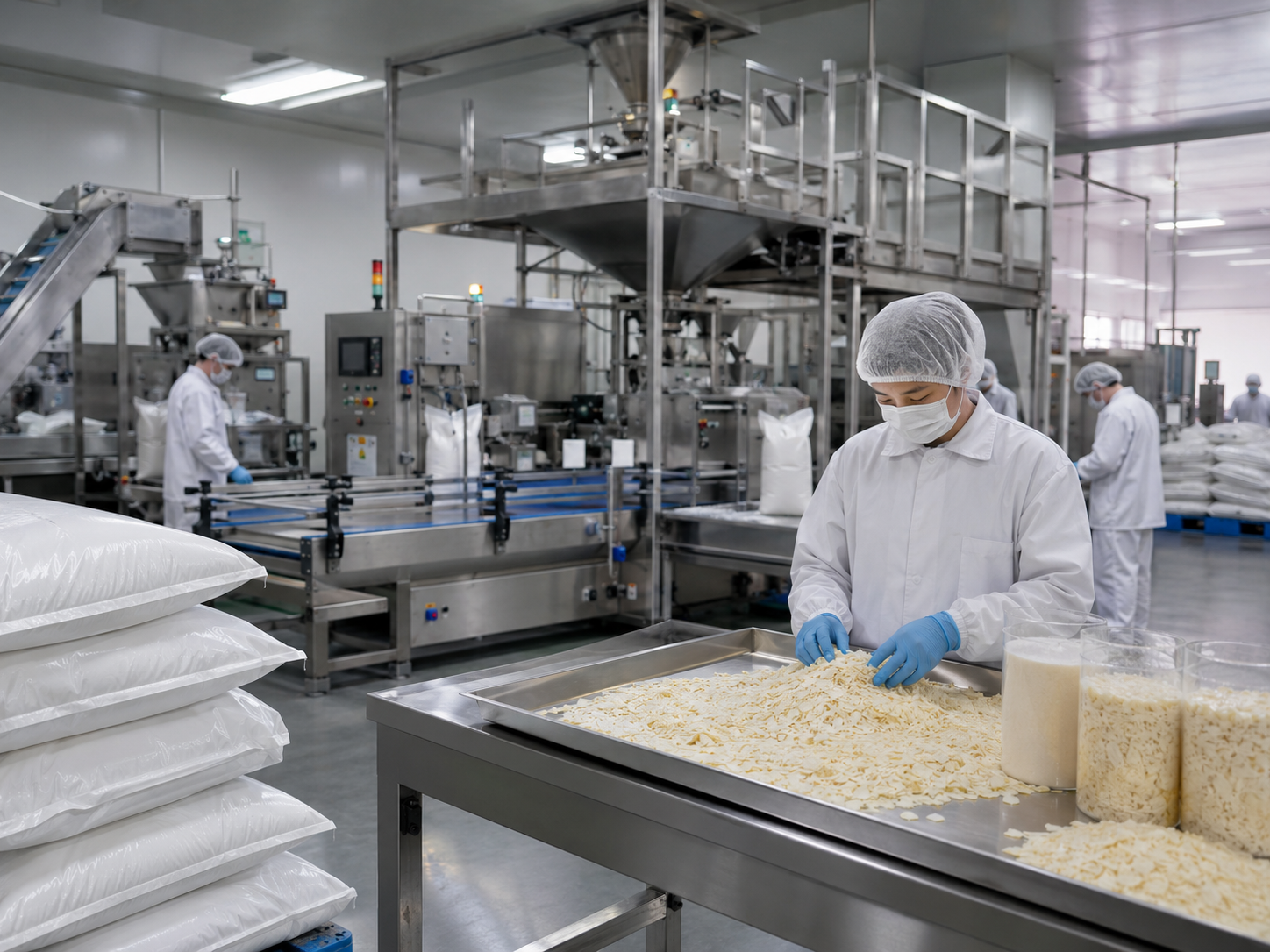
First, the manufacturing process is stable, and the quality is consistent.The texture, rehydration properties, color, and reconstitution of the powder are entirely determined by the production process. Original manufacturers have their own established production lines and process parameters, ensuring that the dry matter content, moisture content, particle size, and texture of every batch remain within a stable range. In contrast, repackagers may source their powder from Zhangjiakou, where quality varies wildly from batch to batch—you never know what condition the next bag will be in.
Second, quality control is traceable.Reputable manufacturers have a comprehensive quality management system in place, covering everything from incoming raw material inspections and production process monitoring to final product testing—including moisture content, microbial levels, rehydration properties, fineness, whiteness, and safety certifications. If any issues arise, they can be traced back to the specific batch. This level of quality assurance is something middlemen simply cannot provide.
Third, it supports flexible customization.This point is often overlooked, yet it’s particularly practical. The needs of different customers vary greatly: those making mashed potatoes need whole-grain potato flour with a high degree of restoration; those making puffed snacks need snowflake-textured whole-grain potato flour with good moldability; some customers require a specific particle size, while others need different packaging sizes. Only manufacturers can adjust their production processes and customize products based on your specific application. Traders can only sell what’s in stock—they may not have exactly what you need—while manufacturers can produce on demand and even develop exclusive specifications for major clients. This flexibility is crucial for food companies and restaurant chains with specific requirements.
Supply Chain: Stability Is the Key to Long-Term Partnerships
Even with high-quality raw materials and consistent product quality, it’s all for nothing if the supply is interrupted. For corporate procurement, “stable supply” is even more important than price—once a production line comes to a halt due to a material shortage, losses are calculated by the hour.
The advantage that original manufacturers have in terms of supply stability is structural in nature.
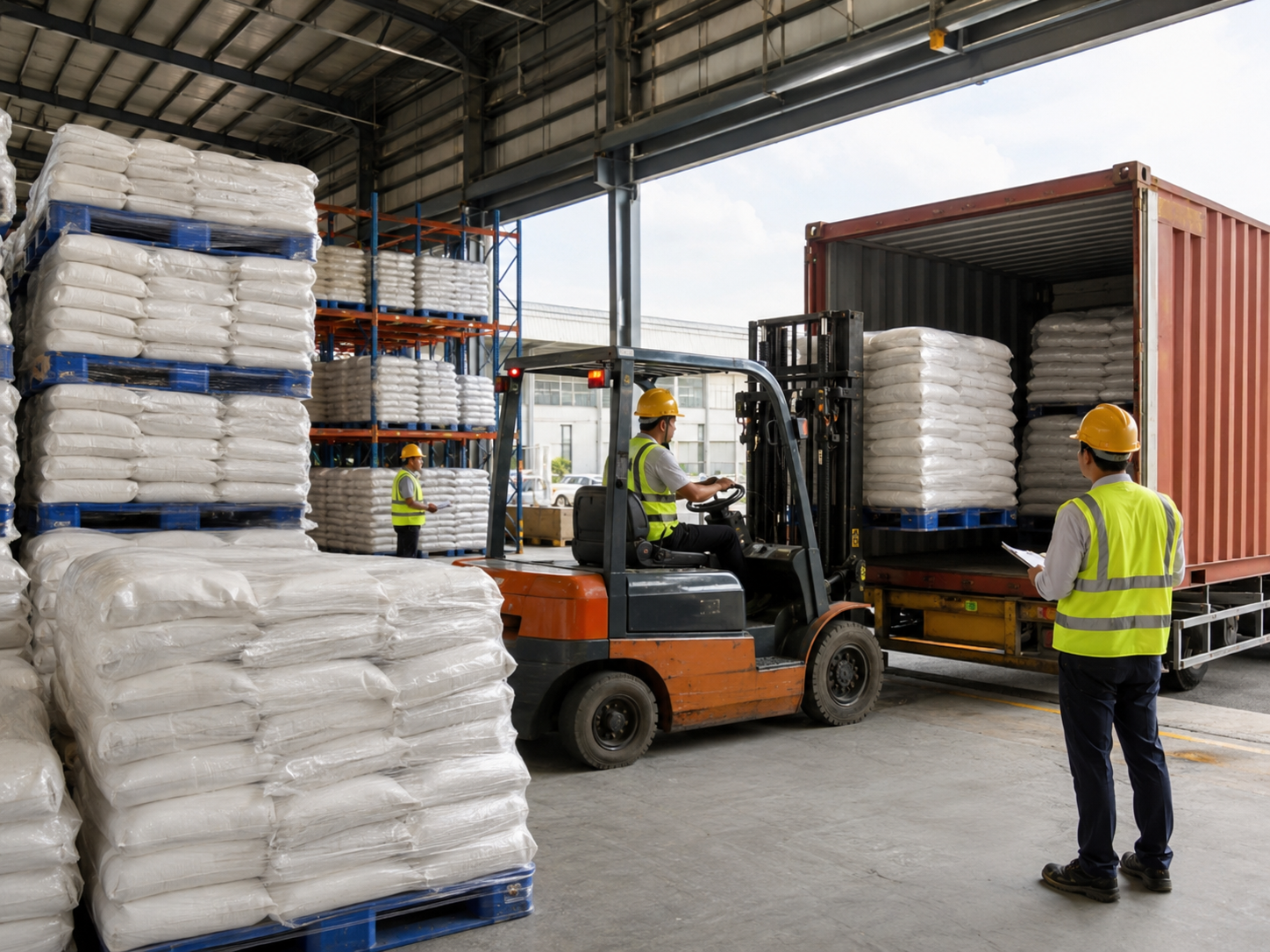
First of all,Production Capacity Is Guaranteed. Manufacturers have their own production lines and control their own production capacity, allowing them to schedule production and stock up in advance based on orders and market conditions. Traders, on the other hand, rely on suppliers for their inventory. If suppliers face shortages, raise prices, or prioritize supplying large customers, intermediaries may be unable to obtain goods, and the risk of supply disruption is directly passed on to you.
Next isHigh resilience to volatility. Potatoes are a seasonal crop, and their prices and supply fluctuate due to weather, yield, and market conditions. Because source manufacturers control the supply chain for raw materials and have the capacity for warehousing and inventory management, they are better able to mitigate these fluctuations and maintain relatively stable supply and prices even when the market is tight.
Next isFast response time. By working directly with manufacturers and cutting out the middlemen, urgent orders, last-minute changes, after-sales issues, feedback, and problem-solving can all be handled more directly and efficiently. When there are several intermediaries involved, information flows slowly, there’s a lot of back-and-forth, and you often can’t rely on them when an emergency actually arises.
And finally,Prices are more transparent and stable over the long term. Establishing long-term partnerships with original manufacturers typically allows companies to secure relatively stable supply agreements and prices, which facilitates cost accounting and annual procurement planning. This predictability is crucial for companies engaged in large-scale production.
The Big Picture: Sourcing Directly from the Source Saves More Than Just Money
Many people think that sourcing directly from the manufacturer is just about getting a good deal. In reality, price is only one factor; the true value lies in the “big picture.”
Raw Materials...you get high-quality ingredients that are the right variety, fresh, and more cost-effective;Production Side...you get products that are consistent in quality, traceable, and customizable;Supply Side...you're guaranteed uninterrupted supply, protection against price volatility, quick response times, and price transparency.
When you add these three factors together, the value of a direct-from-manufacturer supplier isn’t simply “low prices,” but ratherLower overall procurement costs, greater quality assurance, and more stable supply chain security. For any company that uses whole wheat flour in its products and wants to build a long-term business, these three factors are precisely what are most valuable.
A Few Straightforward Words for Procurement
Finally, at the operational level, how do you determine whether the other party is truly the source and whether they are worth partnering with?
- First, check to see if they have a physical factory.Can you provide evidence of your factory premises, production lines, and production certifications? It would be best if we could conduct an on-site visit or a video factory inspection.
- Second, check whether it comes from the production area.Manufacturers located near major potato-producing regions naturally enjoy a more significant advantage in terms of raw materials.
- Third, see if it can be customized.Those who are willing to take on custom orders and can adjust production processes generally have the capacity to manufacture.
- Fourth, check the certifications and test reports.Valid quality and food safety certifications, as well as batch test reports, are mandatory requirements.
- Fifth, consider the supplier's track record and reputation.Suppliers with a track record of stable deliveries and long-term business relationships are more reliable.
Conclusion
In the potato flour business, the importance of the “source” is far greater than one might imagine.
It means quality control that begins with a single potato; it means stable production processes and flexible customization on the production line; and it means a supply chain that ensures year-round availability and can withstand market fluctuations. By bypassing middlemen and working directly with source manufacturers, you save on markups and gain peace of mind.
Key Takeaways
For companies that are truly committed to building solid products and sustaining their business over the long term, choosing the right manufacturer often means selecting a supply chain partner they can rely on for years to come. This investment is well worth it.